The facts
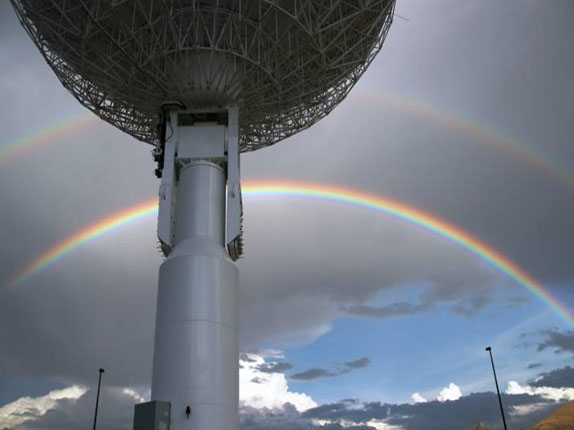
On 25 September 2026, NASA announced that all the ground stations tasked with receiving data from the Nancy Grace Roman Space Telescope are ready, ahead of science operations scheduled by early 2027. They come under three agencies: NASA’s Near Space Network at White Sands (New Mexico), with a backup antenna; a European Space Agency (ESA) station near New Norcia, in Western Australia; and the Misasa station of the Japanese space agency (JAXA), at Saku, Japan.
They will receive data at rates of up to 500 megabits per second. Roman will send back about 1.4 terabytes a day, enough to fill more than two thirds of a 2 TB hard drive every day, a rate NASA says is the highest of any of its astrophysics missions to date.
The tests took place in September: on the 7th at Misasa, from the 8th to the 11th at White Sands, then on the 17th in Australia. The teams received real data from the telescope (temperatures, power consumption, first elements of images). At Misasa, the first reception at Roman’s maximum rate, a typhoon was blowing across Japan: “…conditions were not perfect, which makes this a particularly rigorous test,” said Matthew Wasiak, an advanced systems engineer at NASA’s Goddard centre.
Raindrops, close in size to the wavelength of Roman’s radio signals, can weaken or scatter them, NASA explains; hence stations in very different climates. Bob Kalogerakos, a radio frequency engineer at Goddard, explains that the ground systems spot data that was poorly received and ask the telescope to retransmit it within a few hours from its on-board recorder.
The context
Roman lifted off on 30 August 2026 at 1.26pm (Paris time), on a SpaceX Falcon Heavy from the Kennedy Space Center (Florida). Its commissioning, made up of adjustments and tests, continues during a three-month journey to L2, a point about 1.5 million kilometres from Earth according to CNES. NASA expects it to arrive there about 100 days after launch, in early December.
On 31 August, its first trajectory correction used about 18 kg of fuel instead of the 200 kg budgeted. Because Roman is lighter than planned, its tanks were filled to capacity, rather than only to the level required for ten years. Jamie Dunn, director of the Goddard centre, says Roman has fuel for “at least 22 years” of potential science operations, against 10 in the initial budget. That is a reserve, not a mission duration that has been decided. A second correction, a “very small” one, was planned for later in September; the 25 September post does not mention it. Génération NT relayed these on 17 September.
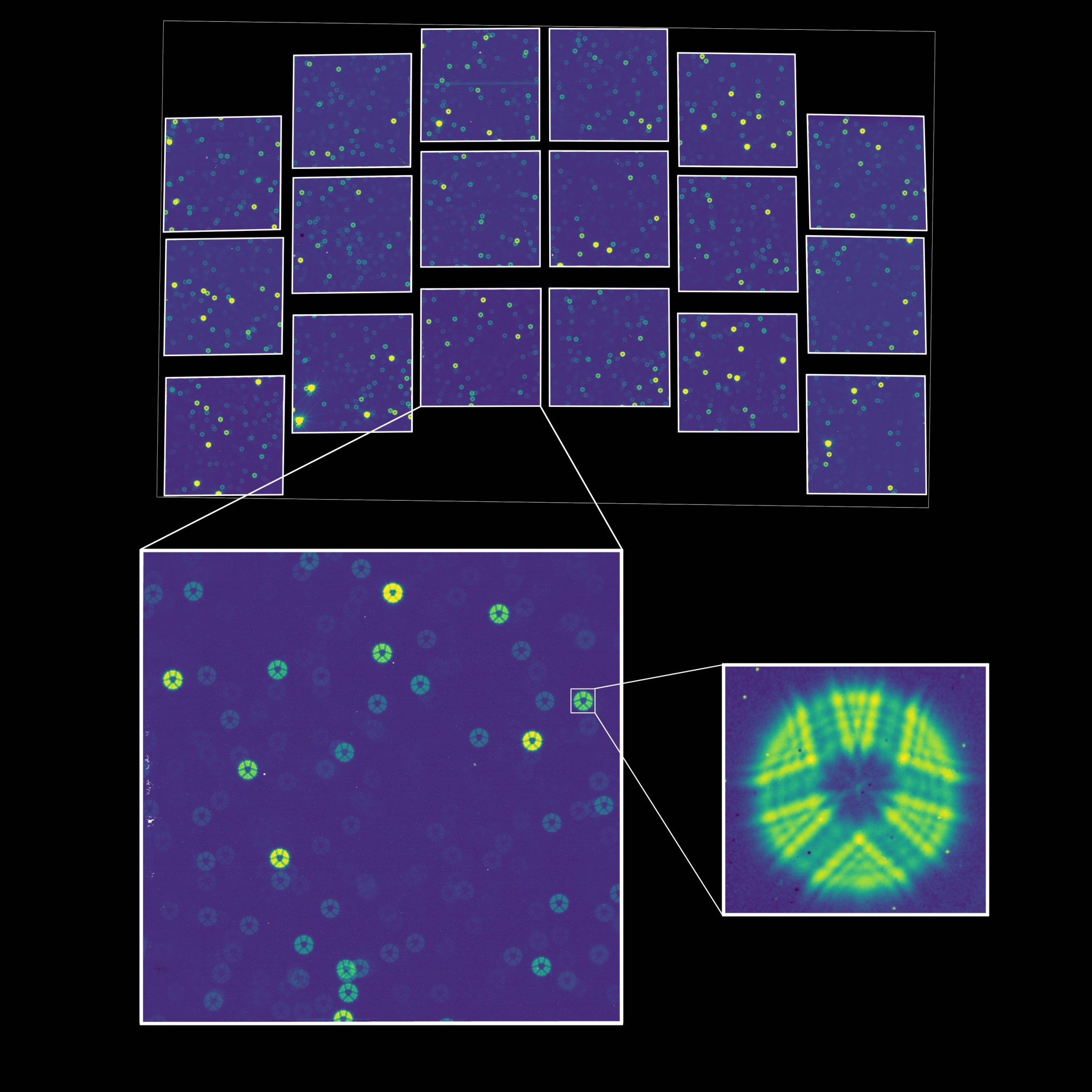
On 11 September, the teams cooled the Wide Field Instrument, a 300-megapixel infrared camera, to −143 °C before activating its 18 detectors. Its first test image shows “a sea of out-of-focus stars”, normal as long as the telescope has not been brought into focus.
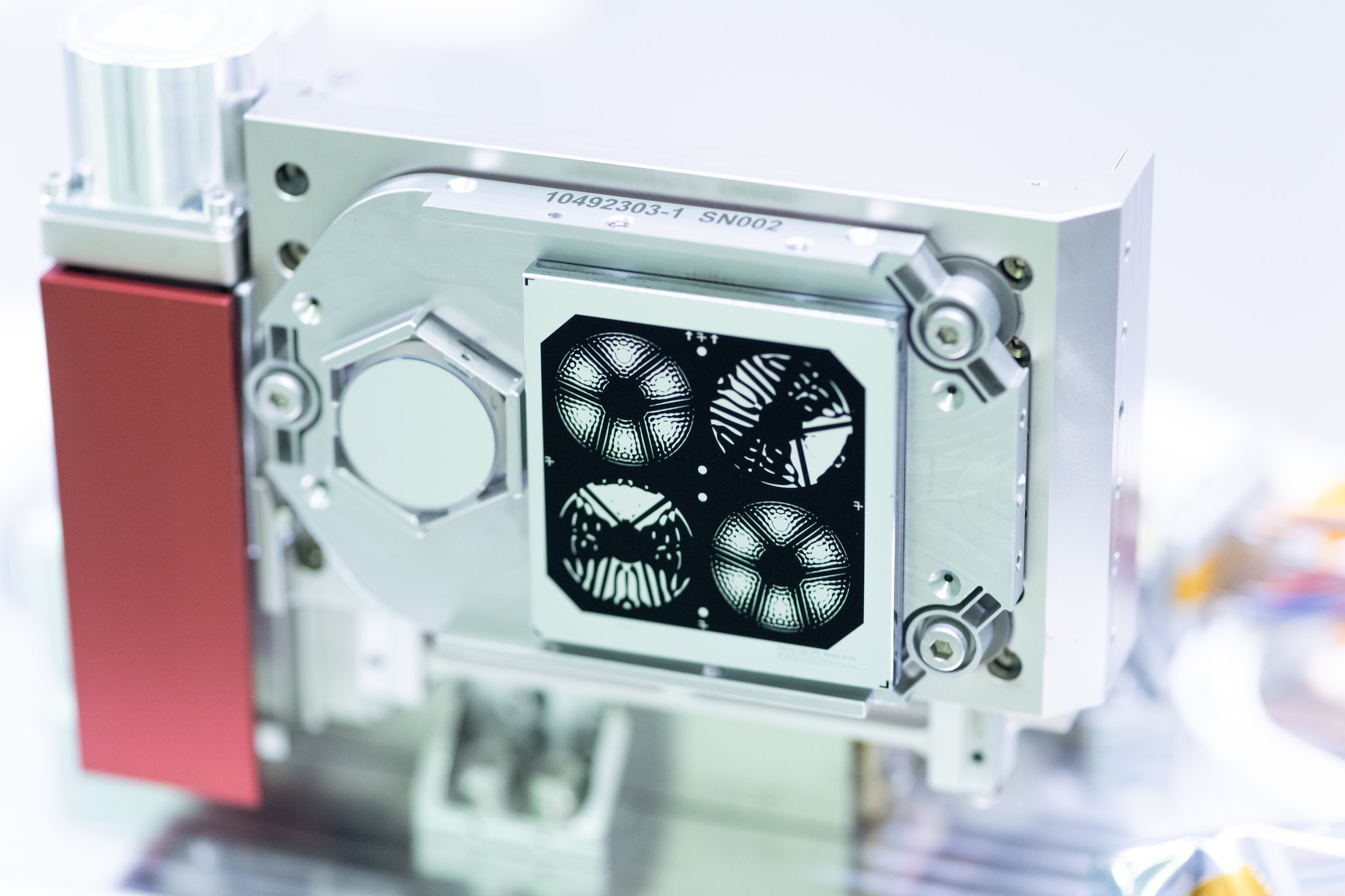
The coronagraph is responding too: the teams are communicating with all of its components. A 30-day “decontamination” follows, with the detectors left warm so that water or chemical traces stuck to their surface can come off, explains Eric Cady, an engineer at NASA’s JPL laboratory.
Why it matters
This step validates the link to the ground through which will pass the hundreds of thousands of images that the Wide Field Instrument is to produce, starting with the first science images expected in early 2027.
According to CNES, the area of sky covered by the instrument will be 100 times larger than that of Hubble, with comparable precision. The mission is to catalogue exoplanets and shed light on dark energy, complementing Euclid, the European telescope.
France has its share in it. CNES, approached by NASA, supplies, with the Laboratoire d’astrophysique de Marseille, some very complex mirrors for the coronagraph; in June 2024, after the instrument’s tests before its transfer, it wrote that it “fully demonstrated its performance, notably thanks to the French optics”. With the CNRS, it also takes part in observation planning, in preparing analysis tools and in interpreting the data.
Archive note
- On 25 September 2026, NASA confirmed that Roman’s ground stations (New Mexico, Western Australia, Japan) are receiving its data at rates of up to 500 megabits per second, or about 1.4 terabytes a day.
- Launched on 30 August 2026 by a Falcon Heavy, Roman switched on its wide-field instrument in September; its first science images are expected in early 2027, and its arrival at the Lagrange point L2 around early December 2026.
- France takes part: CNES and the Laboratoire d’astrophysique de Marseille supply some of the coronagraph’s mirrors, and CNES is preparing data analysis tools for the wide-field instrument.
Sources
- NASA, NASA's Roman Team Confirms Ground Stations Receiving Data, 25 Sept 2026 (primary source)
- NASA, NASA Activates Roman's Primary Instrument, Checks Out Coronagraph, 15 Sept 2026 (primary source)
- NASA, Fuel Savings Double Potential Lifetime for NASA's Roman Mission, 14 Sept 2026 (primary source)
- NASA, NASA's Dark Universe-Seeking Nancy Grace Roman Space Telescope Launches, 30 Aug 2026 (primary source)
- CNES, Nancy Grace Roman : pourquoi ce télescope spatial est plein de promesses, 28 Aug 2026 (primary source)
- CNES, Nancy Grace Roman, 2 Sept 2026 (primary source)
- CNES, Imager des planètes lointaines : la France coopère avec la NASA pour un démonstrateur embarqué sur le télescope Nancy Grace Roman, 21 Jun 2024 (primary source)
- Génération NT, Le télescope spatial Nancy Grace Roman de la NASA est activé et sa durée de vie est déjà doublée, 17 Sept 2026
Image and video credits
- NASA Near Space Network antenna at White Sands (New Mexico), successfully tested to receive data from the Roman telescope.: NASA, public domain (NASA) · source
- First test image from the Wide Field Instrument: blurry stars, because the telescope is not yet in focus. It serves as a reference for adjusting its optics.: NASA's Goddard Space Flight Center, Tyler Desjardins (STScI), public domain (NASA) · source
- “Shaped pupil” masks of Roman’s coronagraph, each about the size of a US quarter.: NASA/Chris Gunn, public domain (NASA) · source
— The Bunker archivists
Method: at least 3 sources including the official one, cross-checked with the help of an AI (Claude), checked and approved by a human on 30 Sept 2026 in the French original; this English version is an AI translation. Our method
Spotted a mistake? Report it: we correct in public.