Suri: The Seventh Note launches on 30 October on PS5, pre-orders open
The rhythm-platformer from Indian studio Tathvamasi will be released on 30 October 2026, after four years of development and at a pace of one beat every 480 milliseconds.
The rhythm-platformer from Indian studio Tathvamasi will be released on 30 October 2026, after four years of development and at a pace of one beat every 480 milliseconds.
On 28 September 2026, NASA and Boeing set out what comes next for Starliner: an uncrewed flight to the ISS in December or January, then astronauts in 2028. On an Atlas V, for as long as any are left.
Minecraft Dungeons II launches on 29 September with the Sift, Minecraft’s first new dimension in over fourteen years: the End is no longer quite the end.
AMD is snapping up World Labs, Fei-Fei Li’s lab specialising in AI-generated 3D worlds: the chipmaker now wants to know what its customers will be computing tomorrow.
The Canadian telescope picked up the signal without help from any other observatory, and its researchers then spent more than a year making sure the universe wasn’t sending them a false alarm.
Santa Monica Studio opens pre-orders for God of War Laufey on 29 September, almost five months before launch: plenty of time to brush up on your archery.
After 14 episodes, Rudeus must wait until 2027 to face Orsted, the Dragon God: a stay of execution granted to the hero and viewers alike.
More than seven years after its release, Avengers: Endgame is back at number one at the North American box office: at Marvel, the endgame apparently allows for extra time.
On 22 September, Microsoft handed development of the next Halo to Activision and cut a further 268 jobs across its Xbox studios. The series is thus moving into its third home in twenty-five years; the archivist has had to start a fresh index card.
NVIDIA unveils Open Agent Safety Platform, meant to stop AI agents from straying outside their boundaries: autonomous software now comes with its own supervisors.
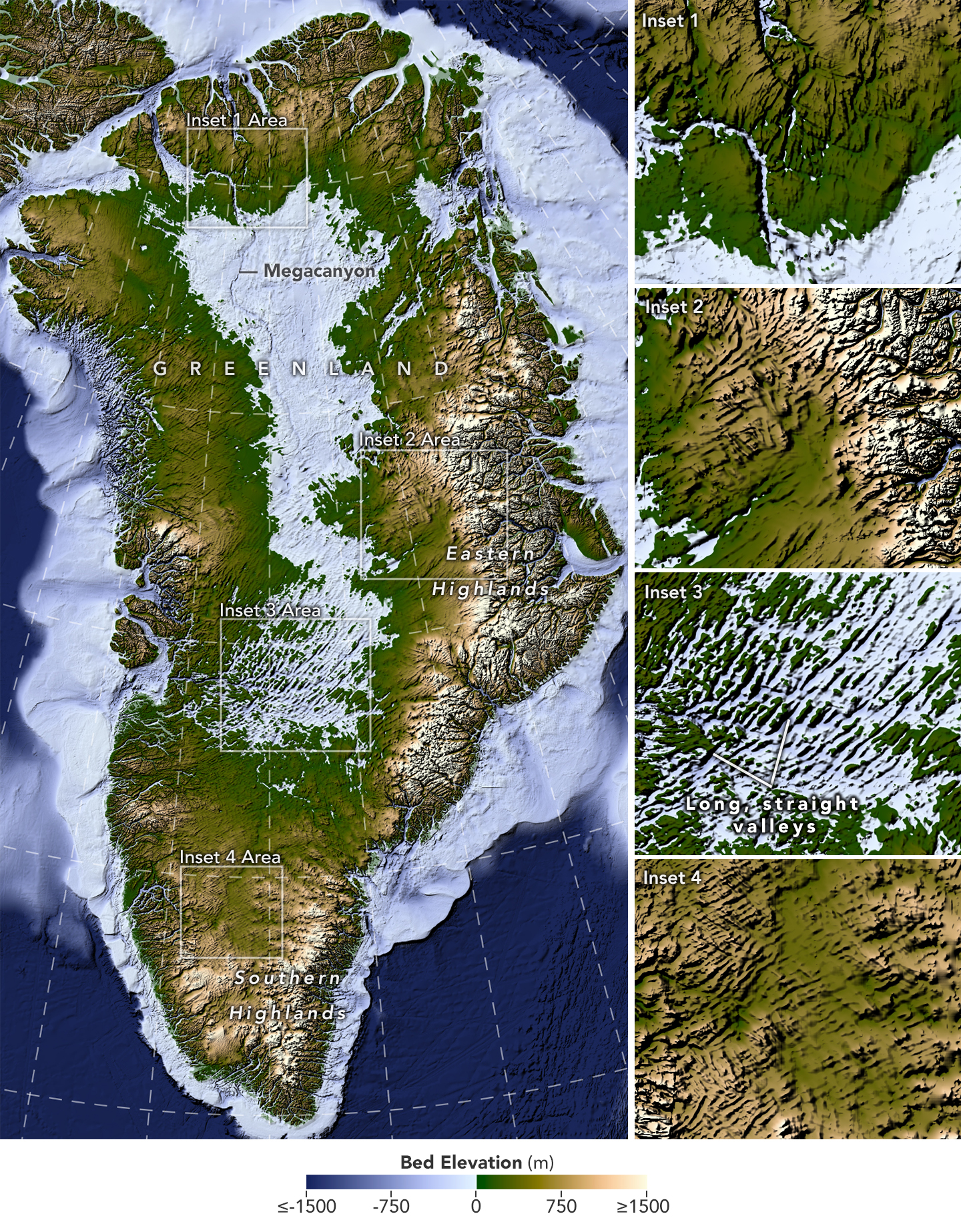
NASA has published a map of 1,943 valleys buried beneath Greenland’s ice, about a third of them previously unknown: more than 3 km of ice turned out not to be enough to keep the secret.
Dune: Part Three and Avengers: Doomsday will open on the same day, 16 December in France and the 18th in North America, and Denis Villeneuve’s film has secured the IMAX screens for three weeks. Shut out of those auditoriums, Disney has launched its own large-format certification: if you can’t make the screen bigger, make the label bigger.
On 27 September Epic Games confirmed that the Five Nights at Freddy’s animatronics are coming to Fortnite: Freddy Fazbear’s pizzeria opens on 1 October, night shift included.
Google will fund power uprates at four Georgia Power reactors, in the US state of Georgia, adding about 96 electrical megawatts. Why build a new power station when you can ask the old ones to dig a little deeper?
The LINK robot, sent to raise the orbit of the Swift space telescope, re-entered the atmosphere on 25 September without ever managing to grab it. Swift, for its part, has switched all three of its instruments back on: if it has to fall, it may as well fall with its eyes open.
The first teaser for Code Geass Star Chaser Aspal, the new series in Sunrise’s franchise, confirms a 2027 launch without revealing anything of the plot.
The European spacecraft passed 8,640 km above the Indian Ocean to borrow a little of Earth’s speed, with no intention of ever giving it back.
On 9 September, Nintendo presented the sequel to Metroid Dread: a hunt on an alien moon, built around the theme of “eat or be eaten”. Samus, clearly, has no intention of ending up on the menu.
On 26 September an Electron placed the 13th radar satellite of Japan’s Synspective into orbit, seven days after the 12th: at this pace, the launch manifest reads like a railway timetable.
A study published on 21 September shows that the rocks of the “Margin Unit”, on the edge of the Martian crater Jezero, were altered by water at least three times, the last time by hot water. Geologists expected shoreline sediments; they found a rock born of magma. Mars has never been one to skimp on surprises.
On 22 September in Maui, Hawaii, Qualcomm unveiled two chips for high-end smartphones, the Snapdragon 8 Elite Gen 6 and 8 Elite Extreme Gen 6, made on TSMC’s 2-nanometre process and designed to run AI assistants directly on the phone. They arrive as soaring memory prices shrink the smartphone market, while chip names, for their part, keep getting longer.
On 24 September, Paramount+ released “Tomorrow’s Enterprise”, the last episode of season 4 of Star Trek: Strange New Worlds, which its showrunners had designed as a possible series finale. Only one six-episode season, expected in 2027, remains to reach Kirk’s era: for a show that travels through time, it is oddly short of it.
On 16 September NASA announced the discovery of McGetchin, a 222-metre-wide lunar crater gouged out in spring 2024: the largest newly formed crater ever spotted in the Solar System. An impact of this size is expected only about once every 132 years; it still took more than a year for anyone to notice.
On 23 September, Netflix unveiled the first trailer for Ray Gunn, Brad Bird’s animated film that crosses the private-eye mystery with retro science fiction. The script spent years asleep in a Warner filing cabinet: the future, it seems, likes to keep people waiting.
On 16 September 2026 in Los Angeles, Snap gave a detailed presentation of Specs, standalone glasses that overlay images on the real world, priced at $2,195 (€2,295 in France) and expected in autumn 2026 in the United States, the United Kingdom and France. It is the first pair of augmented reality glasses that Snapchat’s parent company has aimed at the general public, ten years after Spectacles, some of which ended up as unsold stock.
On Monday 28 September 2026, SpaceX’s giant rocket reached orbit and released 26 Starlink satellites, despite an engine shutting down too early. Planned to last nearly ten hours, the flight ended after three: caution won out over the flight plan.
On 9 September, Nintendo announced Kirby and the World Beyond, a 3D adventure in which Kirby freely explores vast environments, expected in spring 2027 exclusively on Switch 2. It will be the series’ second major 3D entry, in the year of its 35th anniversary: a respectable age for a pink ball that still swallows everything in its path.
On 23 September, NASA selected PRIMA, a space telescope designed to observe the Universe in the far infrared, a kind of light no space observatory has captured since 2013. Launch is planned for 2033: a reasonable wait, by the standards of the galaxies it will study.
Paul Bettany returns as the android Vision in an eight-episode series that closes the trilogy begun by WandaVision. The first two episodes will premiere at the London Film Festival, two days before they land on Disney+.
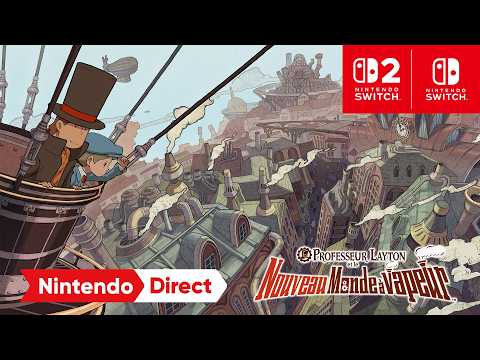
Level-5 has set 10 December 2026 as the release date for Professor Layton and the New World of Steam, on Switch 2 and Switch but also on PlayStation 5 and PC. The first main entry in the series in more than ten years, announced in 2023 and then delayed, it has taken three years to find its date: a puzzle in patience, even for a true gentleman.
A free update to Star Fox on Switch 2 will, from 30 September in France (29 September in North America), let up to four players battle it out on a single console and add three arenas, while Star Fox Adventures joined Nintendo’s GameCube catalogue on Nintendo Classics on 9 September. Battle Mode, until now playable online only, is therefore coming back to the living room, for anyone who would rather see the face of the friend they have just shot down.